
Welcome to the Future of Surgery
The Commission on the Future of Surgery gazed twenty years into the future to identify advances in medicine and technology that are likely to change surgical care. We analysed evidence and assessed the implications of such developments for patients, the surgical profession and the healthcare system.
This is an exciting time to be involved in surgery. The future of surgery will bring innovative technologies, enhanced understanding of disease and wider collaboration among experts and innovators to improve patient care. The partnership between patients and clinicians will remain at the centre of healthcare.
Technologies such as surgical robots, artificial intelligence, three-dimensional printing and new imaging methods are already changing and will continue to change the way surgical care is delivered. Developments in fields such as genomics, regenerative medicine and cell-based therapies could open new avenues for predicting and treating disease, which were unthinkable only a few years ago.
Explore what the future looks like, which technologies are likely to have the greatest impact, and what this means for patients and surgical professionals.







WHICH TECHNOLOGIES WILL MAKE THE GREATEST IMPACT?
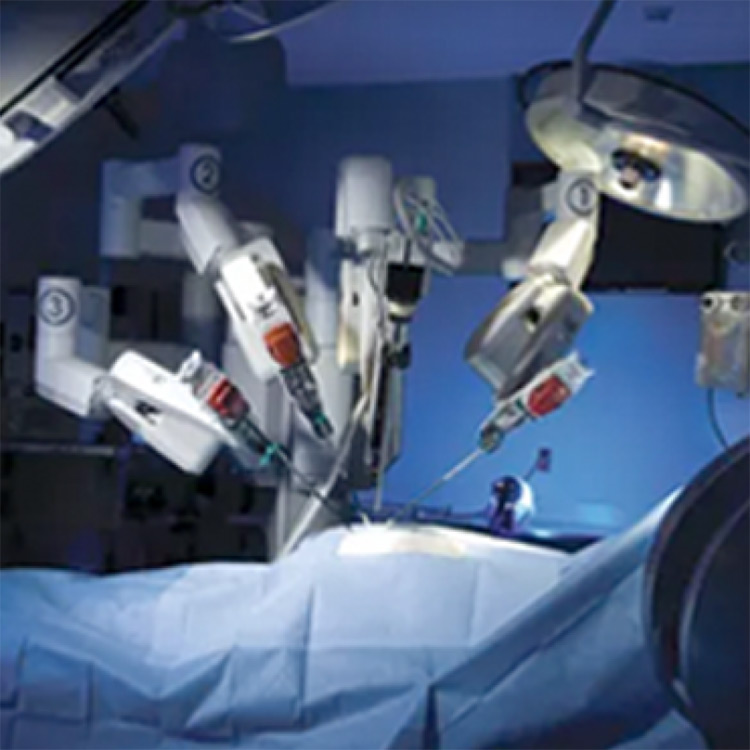

Minimally Invasive Surgery
Surgery has moved towards ever less invasive interventions, with fewer but more-precise cuts and incisions to reduce the impact on patients. Surgery is shifting from seeing, feeling and manipulating organs and tissues through the surgeon’s own eyes and hands, to using an intelligent robotic medium to see and intervene inside the body.
Developments in laparoscopic and endoscopic surgery will enable less invasive diagnostic and therapeutic procedures. A new generation of surgical robots – planned to hit the market in 2019 – will be more slender, versatile and affordable. These attributes will improve the take-up of robot-assisted surgery, with the potential to reduce variation in outcomes.
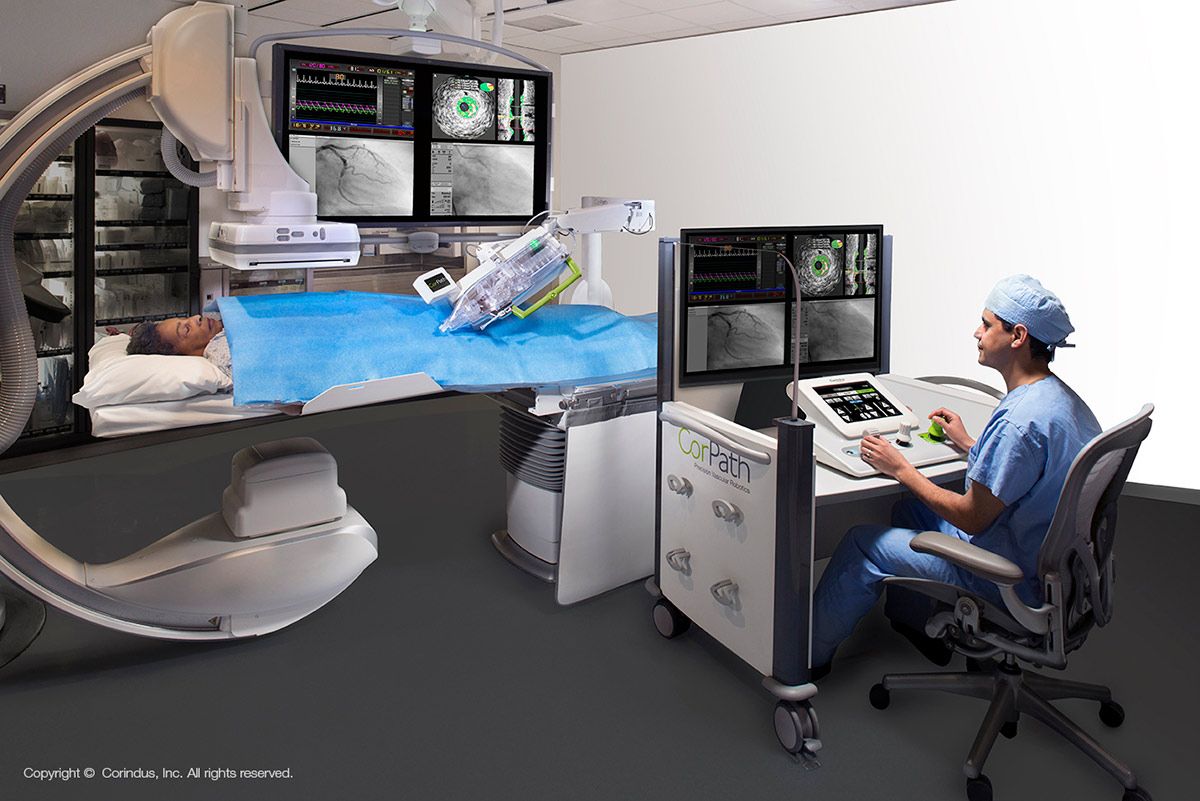

Developments in robotics and machine learning suggest that surgical tasks will increasingly be automated, with more guidance, support and information available to the surgical team. However, fully autonomous robot-surgeons remain unlikely to populate operating theatres in the next few decades.
The human touch of the clinician and their relationship with the patient will remain central to the delivery of excellent care. The ethical and regulatory framework must keep up with advances in technology to ensure patient safety.
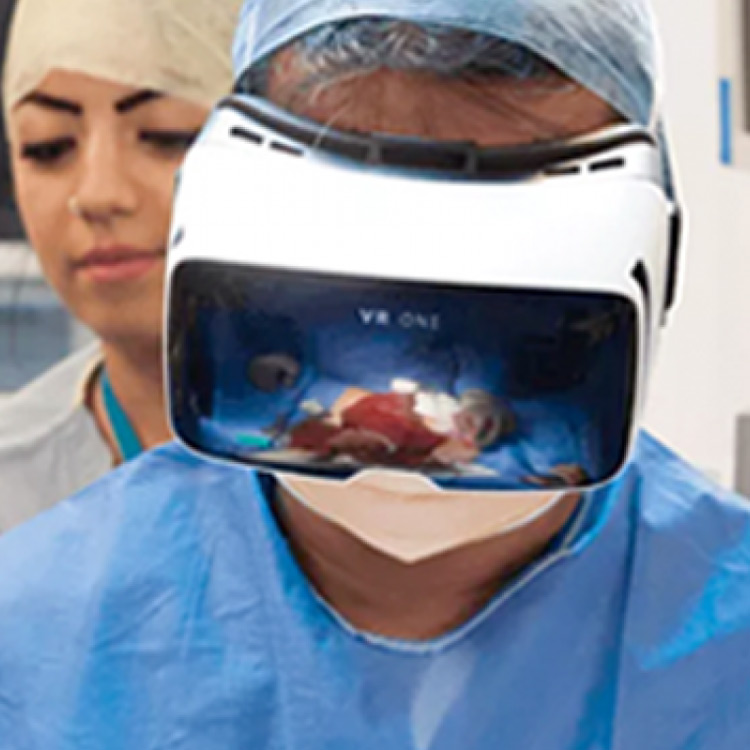

Imaging, VR and AR
Imaging technology is key to the delivery of less invasive interventions, allowing the visualisation of internal structures and organs with reduced impact on the patient. In the next few years, advances in imaging technology will deliver better guidance during a surgical procedure and improve accuracy.
Better imaging is also likely to improve the speed and accuracy of diagnosis. If the direction of travel is one where imaging becomes better able to capture increasingly smaller structures and their functioning inside the body, surgery might move towards interventions at the micro level, such as the cellular level.
Health Education England’s Technology Enhanced Learning Programme, part of their work on the national framework for simulation-based education.
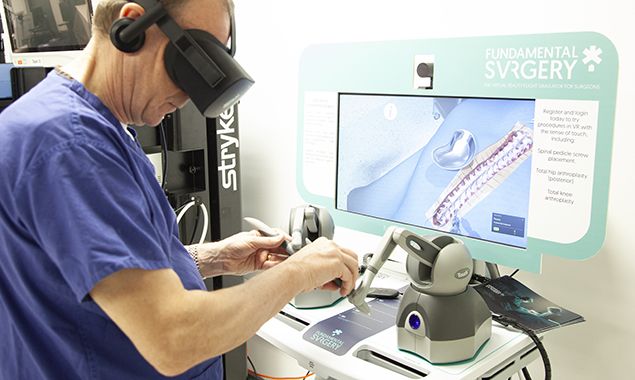
Simulation tools, such as augmented reality and virtual reality platforms, are already used by some surgeons to train and rehearse surgical procedures. The use of these technologies can improve surgical training and outcomes, while standardising procedures and democratising access to training.


CASE STUDY: Touch Surgery
Digital Surgery™ has produced Touch Surgery, a cognitive task simulation and rehearsal platform, which addresses issues such as the limited training time by digitising surgical procedures in a step-by-step fashion. The platform renders high-quality simulated content against each step and introduces user interaction points, while the product and content are free of charge to end-users. By focusing exclusively on the cognitive decision-making components of surgical procedures and utilising 3D renderings of patients, anatomy and instruments, Touch Surgery allows for iterative and deliberate learning and feedback without risk to patients. The product has been validated by more than 16 independent peer-reviewed publications as an efficacious training tool across 8 specialties – including orthopaedics, general surgery, plastic surgery and neurosurgery – and across both high-income and low and middle-income settings. The library of simulated surgical content is the largest of its kind, containing more than 200 procedures.
Touch Surgery app
Image credit Digital Surgery™


Minimally Invasive Surgery
The role of data collection and analysis will increase in future years. The potential for this resource to enable better prediction of disease and more personalised and effective treatments is huge. However, patients and the public must remain informed partners in every stage of this journey and standards on the use of their data must be enforced. Investment and leadership are also necessary to bring the healthcare system and its organisations into the future.


More patients will have access to a genomic medicine service. Genomic testing will improve our understanding of disease profiles, both at a patient-specific and population-based level. In the long-term, genomics will help the development of precision medicine. The choice of treatment will be based on their predicted success for each individual patient.


Specialised Interventions
In the long-term, there will be more complex and specialised interventions. The delivery of cell-based therapies, bio-printed tissues and organs, ‘intelligent’ prosthetics or animal to human transplants will require specialised teams working together in multidisciplinary centres.
In ten to twenty years, organ bioengineering and 3D bio-printing might provide organs to patients waiting on the transplant list, and restore form and function in patients who have sustained trauma or burns.
3D printing and planning technologies are already widely used in surgery to prepare interventions and produce personalised implants. Further developments in 3D printing are likely to make surgery more precise, or open avenues for surgical procedures currently too complex or with outcomes that are too poor.


The use of robotic prosthetics has increased in recent years, with electrodes placed on muscles to control movement. For example, on the digits in a robotic hand. Research is ongoing on the development of ‘intelligent’ prosthetics, as the future of organically controlled prosthetic limbs is quite far away and is not likely to have an impact on surgery immediately in the NHS.
Over the next five years, it is likely that we will see more applications of stem cells across different conditions, such as chronic inflammatory conditions or neurodegenerative diseases.
Although developments in all these technologies hint at an exciting future for medicine and patient care, the complexity, cost, uncertainty and ethical implications of some of these interventions mean that their translation into routine medical practice might take a long time.
WHAT DOES THE FUTURE
MEAN FOR PATIENTS?
Surgery is currently used to treat advanced disease and takes place after the display of symptoms. In the future, surgery will potentially prevent – and not just treat – illness.
Healthcare will continue to shift towards establishing and maintaining good health, prevention and prediction of disease, early intervention and co-ordinated management of chronic conditions.
Patients can confidently expect surgery to become gradually less invasive, more accurate, have more predictable outcomes, faster recovery times and lower risk of harm.
The current unique relationship between the patient and the surgical team will become even more important, as technology allows greater access to information.
Surgery is likely to increasingly focus on improving quality of life and operating on well people and older patients with the aim of prevention.
Less invasive technologies and advances in imaging will enable more patients, particularly frail and older people, and more diseases to be treated with surgery. For example, functional imaging of the brain is already enabling more radical but safer micro-surgery for some cerebral tumours.
Patients will continue to experience an increasing burden of non-communicable chronic diseases and multiple morbidities, such as diabetes or dementia.
The ubiquity of healthcare information and personal data may help patients to become more informed about their own health, but may also lead to greater anxiety. For example, genomic information may inflate demand for risk-reducing surgery.
The speed and variety of innovations and information available will be such that patients may need specialist advice and support to make decisions about their care. For example, greater access to data and medical knowledge may generate inequalities due to different levels of health literacy.
CASE STUDY
MyRecovery.AI
View Case Study
CASE STUDY: MyRecovery.AI
 Digital platforms and telemedicine are already playing an important role in peri-operative care. MyRecovery.AI, a London-based start-up, has created an app that guides patients through preparation and recovery from their operation. Using data analysis, the process is personalised to each patient, who can watch videos of their own surgeon talking through each stage of their pre and post-habilitation, access exercise videos and track their progress through graphs and self-care tools. The use of the app enhances informed consent, enables remote support and provides a means to collect patient data. The app currently focuses on providing support to people with musculoskeletal injuries or conditions, but MyRecovery.AI is working to expand its remit to help patients undergoing other types of surgery.
MyRecovery.AI app
Image credit MyRecovery.AI©


Fictional Future - Nova part one

Fictional Future - Nova part two
CASE STUDY
AI Command Centre – Bradford Teaching Hospitals NHS Foundation Trust
View Case Study
CASE STUDY: AI Command Centre – Bradford Teaching Hospitals NHS Foundation Trust

In October 2018 Bradford Teaching Hospitals NHS Foundation Trust announced it’s collaborating with GE Healthcare to build a Command Centre – like an air traffic control – at the Bradford Royal Infirmary. Using artificial intelligence (AI), it will provide a clear, instant, and real-time overview across the 800-bed hospital and help staff make quick and informed decisions on how best to manage patient care.
Up to 20 trust staff based in the Command Centre will monitor a ‘wall of analytics’ that constantly pulls in streams of real-time data from the multiple systems at the hospital. Advanced algorithms will help staff to anticipate and resolve bottlenecks in care delivery before they occur, recommending actions to enable faster, more responsive patient care and better allocation of resources. The data will be displayed on multiple high definition screens in the Command Centre – as well as on tablets and mobile devices, providing 24-7 support to busy medical teams across the hospital.
The Command Centre will be located centrally in a refurbished space at the BRI site. It will help to reduce unnecessary time spent in hospital after a patient is medically ready to leave, increase the proportion of patients who arrive and are admitted, transferred or discharged from A&E within four hours, and help ensure that patients are always treated in the wards best suited to manage their care.
Over 96% of bed capacity at BRI is used regularly and it has 125,000 Emergency Department (A&E) attendances each year, up by more than 40% over the past decade. The Command Centre programme helps meet the vision of Bradford Teaching Hospitals NHS Foundation Trust to decrease length of stay, alleviate the need for additional wards and beds – especially during peak winter times – and reduce cancellations for non-emergency surgery.
Bradford Teaching Hospitals Command Centre will open in spring 2019.
Source: Bradford Teaching Hospital NHS Foundation Trust
Sample layout of the Command room at Bradford Royal Infirmary
Image credit Bradford Teaching Hospital NHS Foundation Trust

Royal Cornwall Hospital Trust: Virtual Clinics - An Introduction
Health Foundation supported virtual clinic hip and knee follow up programme at Royal Cornwall Hospital, with over 1000 patients seen (at November 2018)
Video credit Royal Cornwall Hospital NHS Trust

HOW WILL THE DELIVERY
OF SURGERY CHANGE?
Theatre space will become more flexible and dynamic, as equipment will be smaller and lighter.
Specialised treatments – such as stem cell therapies or tissue engineering – will continue to be delivered by multidisciplinary teams with specialist expertise. Such care will only be available in a small number of locations, which need to be carefully planned. Other digital technologies, such as 3D printing and planning, will also benefit from multidisciplinary hubs.
Digital technologies and robotics could enable more types of routine surgery to be delivered locally if resources are available, thanks to platforms allowing for remote support and proctoring, and robotic platforms of smaller size and greater versatility.
As the ageing population is expected to live increasingly outside of metropolitan areas, demand for care in those areas will also grow. The current trend of an increasing amount of day-case and overnight stay surgery will continue. Preoperative and follow-up assessment will therefore acquire even greater importance, but they are likely to be undertaken in local settings through the use of telemedicine and digital platforms.
Pathways need to be developed to assess digital devices, diagnostics and drugs, with compulsory registration of novel technologies and devices, using real-time data. A ‘one size fits all’ approach for randomised control trials or a national registry will not work for all innovations.
The surgical royal colleges could have a role in working with national regulators to support or oversee registries of innovations, and support the uptake of innovations that improve quality of life and patient safety.
Submission of follow-up information to central databases is crucial to ensure patient safety. A framework should be in place to oversee this, comprised of appropriate regulators who have access to databases.

GoSurgery app Video credit Digital Surgery™
THE FUTURE
SURGICAL TEAM
The multi-disciplinary and multi-professional surgical care team will become increasingly important in developing and delivering care of the highest quality. They will be able to provide more aspects of care and may take over some areas of surgical care currently delivered by surgeons.
Specialised treatments will give rise to increased multi-disciplinary working. Surgical teams will work alongside bioengineers, geneticists, molecular biologists, data-analysts, transplantation experts and other expert disciplines.
The evolution of the role of the surgeon is likely to depend on the best treatment option for the patient. It could remain unchanged for areas little affected by developments in alternative treatment options or become increasingly blurred with the role of other clinicians for areas where other types of treatments may become preferable.
The surgeon’s role will become increasingly multifaceted and surgeons will need to become ‘multi-linguists’, understanding the language of medicine, genetics, surgery, radiotherapy and bioengineering.
Training must incorporate knowledge of computing, engineering, molecular biology, data literacy, leadership, team building and communication. In an increasingly digitised health service, we must strive to ensure and enhance the humanity in surgery.
New technologies such as data analytics, AR and VR will enhance training, with high-fidelity patient-specific simulation, and remote mentoring and proctoring.
Entry requirements for medical school will need to reflect the diverse range of skills required and encourage students from other backgrounds, such as engineering or computing, to enter medicine.

DeepMind Health digital app, Streams
Video credit DeepMind Health
Fictional Future - Rohan

 Read the Evidence
 DOWNLOAD THE FULL REPORT TO LEARN MORE